
Industry Solution
Run your real estate business with stronger visibility and faster follow-through.
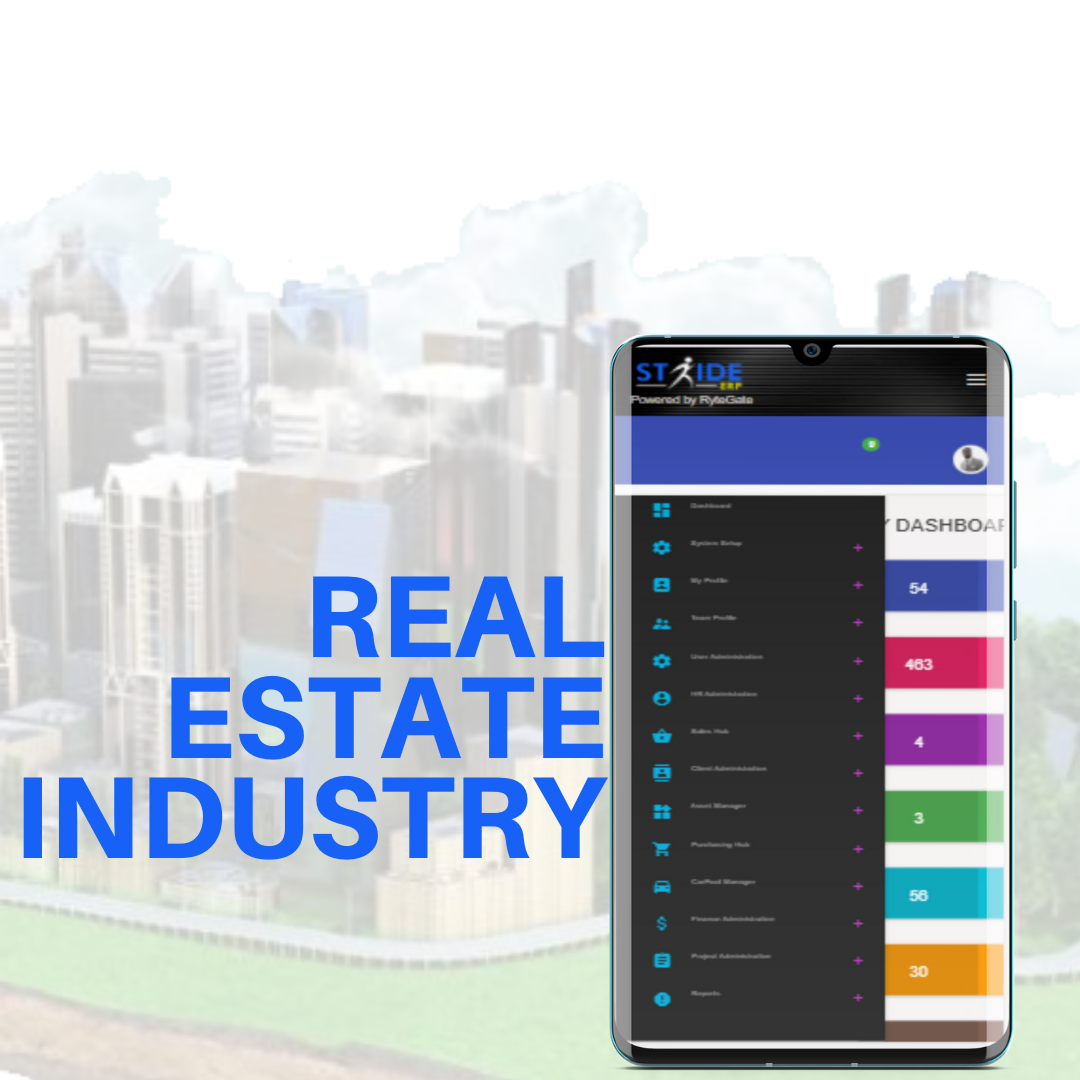
Stride ERP helps real estate teams manage leads, client records, project activity, assets, and financial reporting in one operating environment instead of scattered spreadsheets and disconnected conversations.
4
industry segments supported on this page
5
recommended module areas for this sector
Operational fit
designed to improve control, reporting, and execution speed
Sector Context
Real estate growth breaks down quickly when the underlying process is weak.
Real estate businesses often struggle with disconnected sales activity, inconsistent client follow-up, weak project visibility, and fragmented financial oversight. As the company scales, those small gaps become operational risks.
Stride ERP gives real estate teams a more structured operating model for sales, client administration, payments, project tracking, and asset visibility so the business can grow without losing control.
- Track leads, prospects, bookings, and client follow-up from one place.
- Keep financial visibility tighter across invoices, payments, and reporting.
- Manage projects, properties, and internal teams with less manual coordination.
Industry Segments
Real estate workflows that benefit from a more connected system
Stride ERP is relevant anywhere the business depends on strong client management, property visibility, project coordination, and reliable commercial reporting.
Residential Sales
Manage leads, buyer activity, listings, and sales conversations with better consistency and fewer missed follow-ups.
Commercial Property
Track tenants, space allocation, lease-related processes, and commercial account relationships with stronger visibility.
Property Operations
Keep a clearer record of property status, maintenance needs, and the operational details tied to active assets.
Development Projects
Monitor project phases, bookings, cost activity, and internal coordination across active developments.
Recommended Modules
Stride modules that matter most in real estate
The best setup depends on how your team sells, manages clients, and runs property or development operations. These modules usually carry the most weight.
Sales Hub
Keep campaigns, follow-ups, and sales activity organized so opportunities do not disappear inside manual processes.
Client Administration
Store customer records, transaction context, and relationship history in a more dependable operating record.
Finance Administration
Improve control over balance tracking, reporting, and the financial side of active deals and projects.
Asset Manager
Maintain clearer visibility into properties, status changes, and the assets that shape portfolio performance.
Project Administration
Track construction, development, and delivery work with better booking, phase, and progress oversight.